The Ultimate Guide to NYC Snow Removal: Everything Staten Island Property Managers Need to Know
- Yanni Trittas
- 20 hours ago
- 6 min read

If you manage property on Staten Island, you know that winter isn't just about hot cocoa and picturesque views of the Verrazzano. It’s about the stress of seeing those first few flakes fall and knowing the clock is officially ticking.
In New York City, snow removal isn't just a courtesy: it’s a legal requirement with some pretty strict deadlines. For property managers, missing the window doesn't just mean annoyed tenants; it means hefty fines from the Department of Sanitation (DSNY) and the looming threat of slip-and-fall lawsuits.
At Project One, we’ve been navigating Staten Island winters for decades. We’ve seen the rules change, the storms get more unpredictable, and the fines get steeper. We’ve put together this guide to help you stay ahead of the storm, keep your property safe, and make sure you’re staying on the right side of NYC law.
The NYC Snow Removal Clock: When Do You Have to Clear?
One of the biggest misconceptions we hear is that you have the whole day to get the snow moved. In reality, NYC Administrative Code Section 16-123 is very specific about when the shovels need to hit the pavement. The deadline depends entirely on when the snow stops falling.
Here is the breakdown of the current NYC requirements:
If the snow stops between 7:00 a.m. and 9:00 p.m.: You have exactly 4 hours to clear your sidewalks.
If the snow stops between 9:00 p.m. and 7:00 a.m.: You must have the sidewalks cleared by 11:00 a.m. the following morning.
Think about that for a second. If a storm wraps up at 2:00 p.m., you need to be done by 6:00 p.m. If you’re managing multiple properties across the island: from St. George down to Tottenville: that is a very tight window to coordinate crews and equipment. This is why having a proactive plan isn't just a good idea; it’s a necessity.
Doing the Job Right: It’s Not Just About Shoveling
The city doesn't just care when you clear the snow; they care how you do it. Simply throwing some salt down or clearing a narrow goat path through the drift won't cut it.
The 4-Foot Rule
You are required to clear the "full width" of the sidewalk. If the sidewalk is particularly wide, the city generally requires a cleared path of at least 4 feet. This is to ensure that people with strollers, wheelchairs, or walkers can navigate the neighborhood safely.
Where the Snow Goes (and Where it Shouldn't)
This is where a lot of people get into trouble. You cannot push snow into the street. It might seem like the easiest place to put it, but it creates a hazard for drivers and can block drainage.
Additionally, you must ensure that you aren't piling snow against:
Fire hydrants
Crosswalks
Curb cuts (the sloped parts of the sidewalk used by people with disabilities)
Blocking a fire hydrant isn't just a fineable offense; it’s a major safety hazard for the entire block. Our teams at Project One are trained to prioritize these "critical zones" first to ensure your property remains compliant and safe for first responders.
Dealing with Ice
Sometimes the temperature drops so fast that the snow turns to solid ice before you can get to it. If the ice is too frozen to remove, the law states you must use sand, salt, or sawdust to make the area safe for walking until the weather warms up enough to scrape it clean.
Staten Island’s Unique Winter Challenges
Managing property on Staten Island is a different beast compared to Manhattan or Brooklyn. We have different geography, different street layouts, and: let’s be honest: we often get hit harder by coastal winds.
The Geography Factor
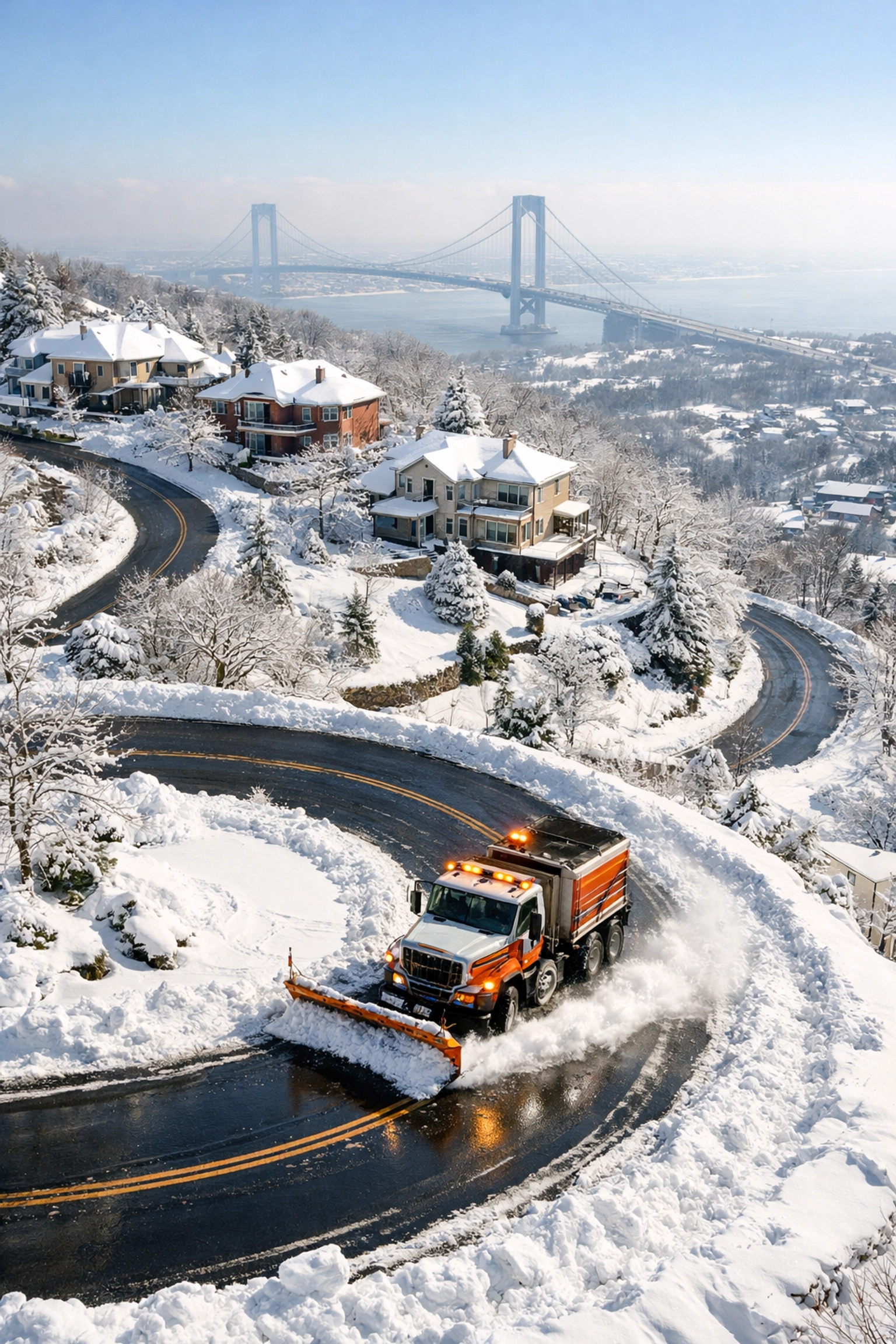
Staten Island isn't flat. If you manage property in Todt Hill, Grymes Hill, or Silver Lake, you’re dealing with steep inclines that become ice skating rinks the moment the temperature dips. Regular plowing often isn't enough for these areas; you need a heavy-duty salting strategy and crews who know how to navigate hilly terrain in a blizzard.
The "Borough of Parks" Problem
We love our green spaces, but properties near our many parks often deal with wind tunnels that create massive drifts. A light three-inch dusting in New Dorp might turn into a two-foot drift against a building near the Greenbelt.
Residential vs. Commercial Mix
Staten Island has a lot of strip malls and standalone commercial buildings tucked into residential neighborhoods. This means property managers often have to balance the needs of high-traffic commercial sidewalks with the quiet requirements of a residential block. At Project One, we understand these local nuances because we live and work here. We know which streets get plowed by the city first and which ones are likely to be buried for hours.
New for 2026: The New Public Space Pilot Program
As of March 2026, there’s a new set of rules that property managers need to be aware of. The NYC Council recently launched a two-year pilot program focusing on public amenities.
If your property is adjacent to or houses structures like:
Bus shelters
Bike share stations (CitiBike)
Public communications equipment (like LinkNYC kiosks)
The city is getting much stricter about the "no man's land" around these spots. Under the new program, the Department of Sanitation (DSNY) will be actively monitoring these areas. If snow or ice accumulates and blocks access to a bus shelter or bike rack near your property, you could face enforcement action if it isn't remedied quickly.
The city is coordinating with private vendors like JCDecaux (for bus shelters) and Lyft (for bike stations), but as a property manager, the responsibility for the surrounding sidewalk still largely falls on you.
The High Cost of Cutting Corners
You might think, "I'll just wait until the morning and see if it melts." That is a dangerous game to play in NYC.
DSNY Fines
The Department of Sanitation is very active after a storm. Fines for "failure to clean snow/ice from sidewalk" can start at $100 for a first offense and jump significantly for repeat violations. If you manage a large portfolio, those tickets can add up to thousands of dollars in a single weekend.
Liability and Lawsuits
The tickets are annoying, but the lawsuits are devastating. NYC is a litigious place. If a pedestrian slips on your sidewalk five hours after the snow stopped falling, you have very little legal defense. "Slip and fall" settlements can cost property owners hundreds of thousands of dollars.
When you hire a professional service like Project One, you aren't just paying for snow removal; you're paying for a paper trail of compliance. We document when we arrived, what we did, and when the job was finished. That documentation is your best friend if an insurance claim ever crosses your desk.

Why Project One is Your Best Winter Defense
We know you have choices when it comes to snow removal. You could hire a guy with a shovel, or a kid with a plow on the back of his pickup. But for professional property managers, those options are risky.
Project One offers something different: Decades of experience.
We’ve seen every type of NYC winter imaginable: from the "Snowmageddon" blizzards to the weird slushy ice storms that are even harder to manage. Here is why Staten Island property managers trust us:
Local Knowledge: We know Staten Island. We know the shortcuts, the hills, and the neighborhoods that drift. We don't get lost trying to find your property in a whiteout.
Reliability: When the "4-hour clock" starts, we are already on the move. We have the equipment and the manpower to handle large-scale commercial properties and multi-unit residential complexes simultaneously.
Simple Communication: We don't like fluff. We give you clear updates, simple billing, and straightforward service. Our brand tone is "simple" because we believe property management is hard enough: your snow contractor shouldn't make it harder.
Full-Service Care: We don't just plow the parking lot and leave. We clear the sidewalks to the required 4-foot width, salt the ice, and ensure fire hydrants and curb cuts are wide open.
Don't Wait for the First Flake to Fall
The best time to handle a snowstorm is three months before it happens. In the middle of a blizzard, every reputable snow removal company in the five boroughs will be booked solid.
If you’re looking for a partner who understands the specific needs of Staten Island and the strict regulations of NYC, let's talk. We help new clients transition from "stressing about the weather" to "resting easy knowing it's handled."
Project One has the experience to ensure your jobs are done right, on time, and within the law. Let us take the winter weight off your shoulders.
Ready to get a plan in place for your property? Reach out to us today and let’s make sure you’re ready for whatever the 2026 winter season throws at us.
Comments